Hping2 Windows Vista

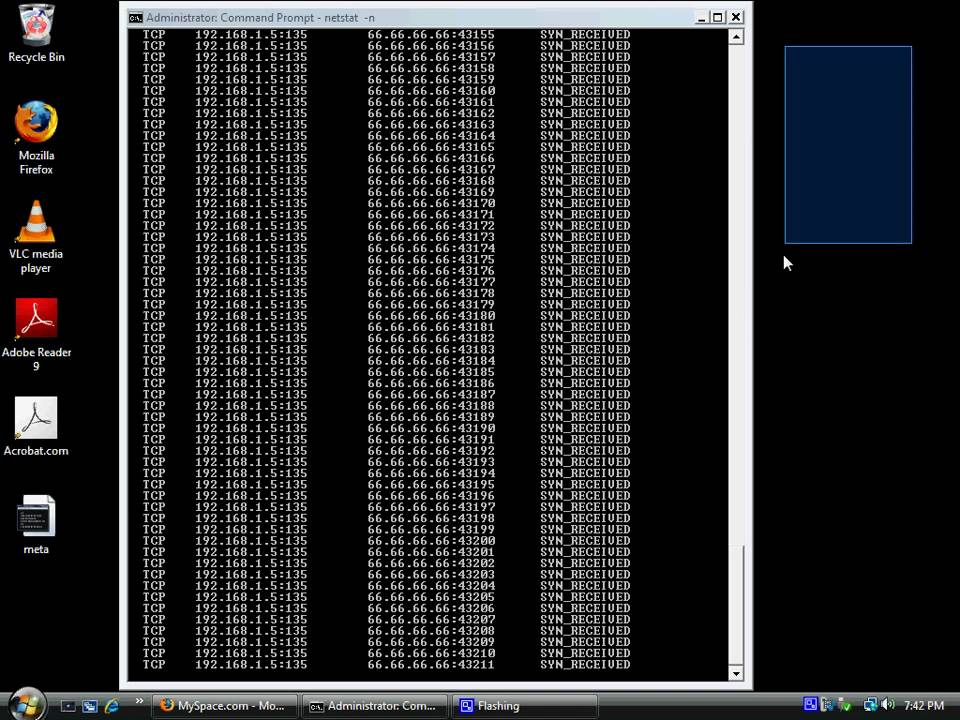
Category CEH.03.Scanning Network. Hping2 is a network utility that can be used for scans or to create. Windows Server 2003, Windows Vista, Windows 7, etc. I had Windows 7 Ultimate 32 bit, then I upgraded it to 64 bit (still Wind0ws 7 Ultimate, and I have 8 GB of RAM).My problem is that I can't open any games that I want.
Assessing security controls involves more than simply scanning a firewall to see what ports are open and then running off to a quiet room to generate a report. It is natural for security engineers to gravitate toward technology and focus on technical security control testing (otherwise known as penetration testing), because it is likely the 'fun' part of security for most engineers. Conducting a penetration test is like throwing down the gauntlet to security professionals, and it gives them an opportunity to flex their hacker skills. Testing security as a system, however, involves significantly more than launching carefully crafted evil packets at the network to see what happens.
Echo F1 Speedometer Manual Treadmill. This chapter discusses software tools and techniques auditors can use to test network security controls. It is important to note that this is not a chapter about hacking. You will not learn all of the techniques and tools available today for breaking into networks. Do a search at your favorite online bookseller for the terms hacking, hacker, or penetration testing and you will find a slew of books devoted to the topics. Security testing as a process is covered, but the focus is on gathering the evidence useful for an audit. Thoroughly assessing security controls serves a vital part in determining whether or not a business is compliant with its policies, procedures, and standards. Through security controls testing, you can determine whether the organization meets its goals for reducing risk and keeping evildoers out of the network and away from critical systems.
Evaluating Security Controls Security controls are the safeguards that a business uses to reduce risk and protect assets. Policy determines what security controls are needed, and those controls are selected by identifying a risk and choosing the appropriate countermeasure that reduces the impact of an undesirable event (such as a customer database being stolen).
The evaluation of security controls in its simplest form validates whether or not the control adequately addresses policy, best practice, and law. Testing security controls for effectiveness and measuring them against standards are of the best ways to help an organization meet its obligations to shareholders and regulatory responsibilities. As discussed in Chapter 1, 'The Principles of Auditing,' the main security control types are administrative, technical, and physical. Under each category, the specific controls that can be implemented are preventative, detective, corrective, or recovery.
These control types work together, and in general, you must provide controls from each category to effectively protect an asset. When testing controls, make sure that each functional category is addressed and all controls are implemented in a way that doesn't allow someone easy circumvention. You can have the most advanced firewall in the world as a preventative control, but without monitoring its effectiveness through detective controls, such as log reviews and IPS, you would never know for sure if it enforced policy. These missing pieces are typically what hackers exploit to break into systems, and it's the auditor's job to identify and report on weaknesses in the system. When evaluating security effectiveness, you need to examine three primary facets for every control. All security incidents, from break-ins to lost customer records, can usually be traced back to a deficiency that can be attributed to people, process, or technology. Testing these areas enables you to analyze security from a big picture perspective, gives you a better understanding of how an organization performs today, and recommends improvements for tomorrow.
Following are the three facets to examine: • People are users, administrators, data owners, and managers of the organization with varying levels of skills, attitudes, and agendas. If users are not following security policies, there might be a need for stronger administrative controls such as security awareness training or penalties for noncompliance (this is the 'up to and including getting fired' clause that HR puts in the employee manual).