Using Microsoft Enterprise Library Logging Configuration
As part of my recent foray into creating various Windows services, I've come across the need for logging (like all serious apps do) and decided to use the Microsoft Enterprise Library Logging Application Block. We used it at a previous company and it got very good reviews from the developers there who used it. Unfortunately, all of the tutorials out there are a bit useless when it comes to doing anything real with the Logging Application Block, like using custom configuration. Fortunately, it was easy enough to figure out how to get customized configuration of logging working just by looking in the assembly and writing some unit tests to experiment.
• Open Visual Studio (I'm using 2010) • Install NuGet from the Extension Manager, if you haven't already. Program Za Spajanje Vise Fajlova U Jedan Glance Feat Mandinga Cinema Zippy. here. • Install EnterpriseLibrary.Config from the Extension Manager if you haven't already. • Create your solution and project that requires logging.
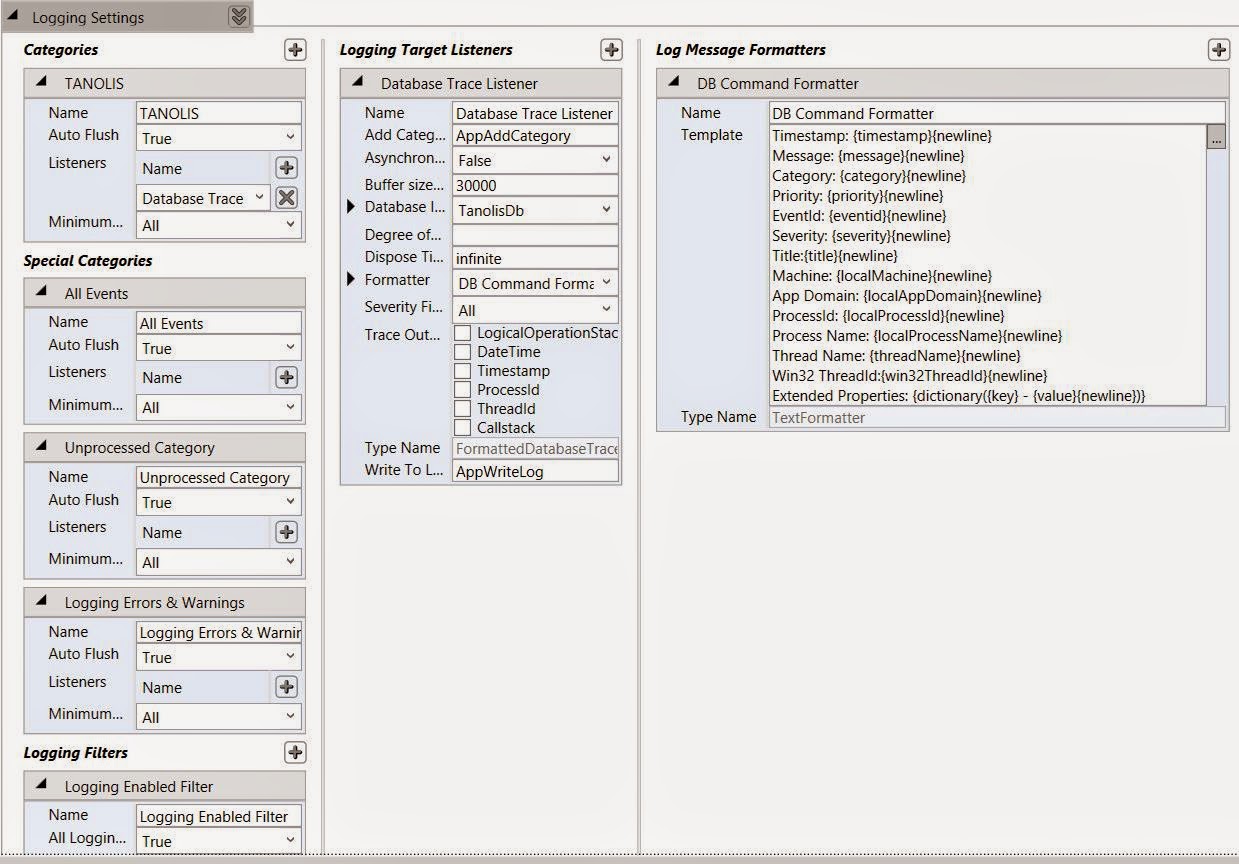
• If your project (web or application) comes with a.config file already (i.e. Program For Absolute Loader on this page. Web.config or App.config respectively) you can use that, otherwise, you can create an app.config file for the assembly in which you're creating your logging service. • Once you've figured out which app.config (or Web.config) file you're going to be using (i.e. The same assembly where you're placing your logging class, right click on the.config file. You should see an 'Edit configuration file' entry with an orange logo (provided by the add-in installed in Step 3 above).