Beck Depression Inventory Bdi Ii Pdf

Depression and Anxiety Depression and anxiety are common reactions to trauma. They can be responses to unresolved trauma, or they may be maladaptive ways of coping when pain and emotions flood the nervous system over time.
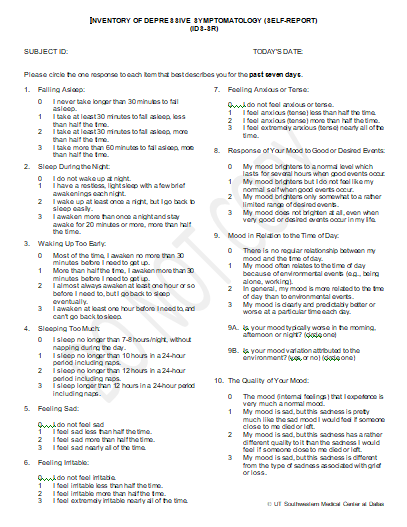
The BDI-II is a widely used 21-item self-report inventory measuring the severity of depression in adolescents and adults. The BDI-II was revised in 1996 to be more. Beck Depression Inventory II (BDIII) The BDIII is a 1996 revision of the BDI (Beck, Steer & Brown, 1996), created to fall in line with the updated DSMIV criteria for depression. The Beck Depression Inventory for Youth is for use. (Beck, Steer, & Brown, 1996). The BDI-II discriminates depressed from non-depressed patients (Beck. Created Date: 1/28/2013 10:05:12 AM.
The system maintains a constant state of emotional “OFF” as with depression or a constant state of emotional “ON” as with anxiety. Although no one would say that depression or anxiety are ways to cope, when faced with tasks or challenges that feel overwhelming and debilitating, sometimes alternative responses hide the original fear and pain. Depression and anxiety can become short-term relief from greater pain.
However, when these states take over, and there is no energy to engage in life, to function or even move, it’s time to seek help. The Bridge to Recovery does not provide primary treatment for depression and anxiety; however our goal is to address the underlying problems that feed these mood states. When feelings are depressed, anxiousness becomes a primary emotion or there is a constant mixture of both, there is no motivation or energy to work on getting better.
The program at The Bridge is designed to explore what happened before the anxiety or depression set in and discover how this became the alternative to healthy living. These mood states can be very confusing, and there may not be an understanding of their origins. As Director of Clinical Services at The Bridge, I had the opportunity to go through the two-week program. I did not realize how much of a role anxiety played in my life. It wasn’t until days after I left, I realized I had worked on my overwhelming anxiety.
I would have described it as a constant motor running inside my body. I was always in a state of “On” – like a motor humming all the time. I would have told you that “motor” made me feel alive and I used it as a way to feel motivated. It made me feel safe as if that constant vigilance and preparation would keep me from harm. What I didn’t realize was that the feeling was a reaction to trauma and fear, and I was always on guard.
Moorhuhn The Jewel Of Darkness Game here. I was wearing out my body and as well as the responses meant to warn of real danger. As my body returned to normal, I could feel a hollowness that felt foreign. I had used so much space and energy with this learned response that I was unable to use my feelings and emotions for the purposes they were intended. I worked on understanding self-regulation and learned how to “reprogram” these responses at the Bridge. You may know that depression and anxiety are a problem. They may have even become debilitating.
You may realize that you need to address the issues beyond these symptoms. However, you may not know if these are a problem for you. You may feel that something isn’t right and want to figure out how you can feel better. Either way, The Bridge can help. Our program is designed to provide healing from the underlying issues. It’s not important that you know what those are. What is important is that there is help available to feel better and a supportive team that can guide the process.
Let us help you work on the pain beneath the symptoms for a healthier and more satisfying way of life.
Beck Depression Inventory-Second Edition (BDI-II) Type: 11-item self-report inventory Access: Overview:. The BDI-II was revised in 1996 to be more consistent with DSM-IV criteria for depression. Individuals are asked to respond to each question based on a two-week time period rather than the one-week timeframe on the BDI. The BDI-II is widely used as an indicator of the severity of depression, but not as a diagnostic tool, and numerous studies provide evidence for its reliability and validity across different populations and cultural groups. It has also been used in numerous treatment outcome studies and in numerous studies with trauma-exposed individuals.
Recommended Citation: • Beck, A.T., Steer, R.A., & Brown, G.K. Manual for the Beck Depression Inventory-II. San Antonio, TX: Psychological Corporation. [LINK/CITATION] Additional information: The BDI takes approximately 10 minutes to complete, although clients require a fifth – sixth grade reading level to adequately understand the questions. Multiple language formats available PDF: [BUTTON/FILE] no *If this instrument is made available in error, we apologize and will take actions to remove the option to download. We are more than willing to direct any interested parties to a preferred alternative site.